
Most homeowners look up at their roof only when something’s already wrong, a leak, missing shingles, or that unmistakable stain creeping across the ceiling. But there’s another threat that develops silently over months and years: organic growth. Algae, moss, lichen, and debris don’t just make a roof look neglected. They trap moisture, degrade shingles, and can shave years off a roof’s lifespan. Regular roof cleaning isn’t about curb appeal alone, it’s preventive maintenance that protects one of the home’s most expensive systems. This guide walks through why, when, and how to clean a roof safely, whether tackling it as a DIY project or bringing in a pro.
Table of Contents
ToggleKey Takeaways
- Regular roof cleaning removes algae, moss, and debris that trap moisture and can reduce your roof’s lifespan by up to a third, protecting one of your home’s most expensive systems.
- Soft washing with low-pressure water and cleaning solution is the safe method for asphalt shingles, while pressure washing can strip granules and void warranties.
- Dark streaks, green moss patches, missing granules, and clogged gutters are clear signs your roof needs cleaning, and inspection should happen at least once yearly.
- DIY roof cleaning requires essential safety gear including a harness, non-slip footwear, and gloves, plus a dry work day—but hiring a professional ($300–$600) is wise for steep or multi-story roofs.
- Preventive maintenance like trimming branches, cleaning gutters twice yearly, and installing zinc strips between cleanings extends roof life and delays the need for costly replacements.
Why Regular Roof Cleaning Matters for Your Home
A roof isn’t a set-it-and-forget-it component. Organic growth, especially algae (Gloeocapsa magma) and moss, thrives in damp, shaded areas. Algae show up as dark streaks on asphalt shingles, feeding on the limestone filler in the shingle material. Moss holds moisture against the roof surface, causing granule loss and lifting shingle edges, which opens pathways for water infiltration.
Left unchecked, this accelerates deterioration. Asphalt shingles typically last 20–30 years, but persistent moss or algae can cut that by a third. On wood shake roofs, organic buildup leads to rot. Metal and tile roofs fare better structurally, but debris clogs valleys and gutters, creating standing water that can work under flashing.
Cleaning also preserves energy efficiency. Dark algae stains absorb more heat, raising cooling costs in summer. A clean roof reflects more sunlight, particularly with lighter-colored shingles. Regular maintenance extends roof life, protects the underlying structure, and avoids the sticker shock of premature replacement, often $8,000 to $15,000+ for a typical home.
Signs Your Roof Needs Cleaning
Walk the perimeter of the house and look for these indicators:
- Dark streaks or black stains running down shingles, especially on north-facing or shaded slopes. That’s algae, and it spreads.
- Green patches or fuzzy growth, moss. If it’s thick enough to cast a shadow, it’s already holding moisture under the surface.
- Shingle granules in gutters. Excessive granule loss points to aging shingles or damage from organic growth.
- Clogged gutters and valleys filled with leaves, pine needles, or debris. Blocked drainage leads to standing water.
- Visible daylight or water stains in the attic, which can indicate compromised roofing underlayment from prolonged moisture exposure.
A roof should be inspected at least once a year, ideally in spring or fall. If any of these signs are present, cleaning should move to the top of the maintenance list. Waiting until shingles curl or leaks appear means the damage is already done.
DIY Roof Cleaning: Methods, Tools, and Safety Tips
Soft Wash vs. Pressure Wash: Choosing the Right Method
For asphalt shingles, soft washing is the recommended approach. This method uses low-pressure water (under 500 PSI) combined with a cleaning solution, typically a mix of water, sodium hypochlorite (bleach), and a surfactant. The chemical does the work, breaking down algae and moss without blasting away shingle granules.
A typical DIY soft wash recipe: 1 part 6% sodium hypochlorite to 1 part water, plus a small amount of dish soap or commercial surfactant to help the solution cling. Apply with a pump sprayer or a soft wash system (available for rent or purchase, starting around $150 for a basic setup). Let it sit for 10–15 minutes, then rinse gently with a garden hose.
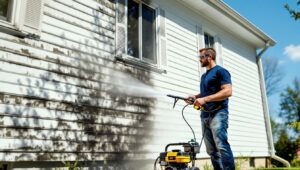
Pressure washing, on the other hand, uses high PSI (1,500–3,000+) to physically remove debris. It’s effective on tile, metal, or concrete roofs, but it’s too aggressive for asphalt shingles. The force can strip granules, void warranties, and create more problems than it solves. Homeowners looking to tackle basic DIY repair tutorials should know that using the wrong cleaning method is one of the fastest ways to damage a roof.
For wood shake, avoid bleach, it can discolor and weaken fibers. Use a specialized wood roof cleaner or a diluted oxygen bleach solution. For metal roofs, a mild detergent and low-pressure rinse work well.
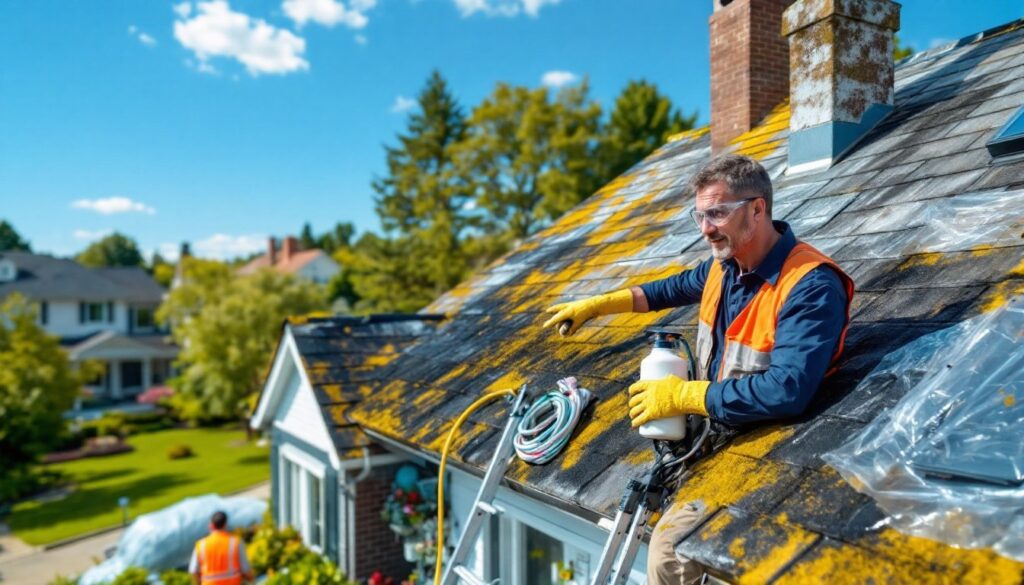
Essential Safety Precautions for Roof Cleaning
Roof work is inherently risky. Falls are the leading cause of serious DIY injuries. If the roof pitch exceeds 6/12 (6 inches of rise per 12 inches of run), or if the homeowner isn’t comfortable with heights, hire a pro.
Required PPE:
- Non-slip footwear with rubber soles
- Safety harness and anchor point if working on steep pitches
- Safety goggles to protect from chemical splashes
- Chemical-resistant gloves (nitrile or neoprene)
- Long sleeves and pants to protect skin from bleach
Additional safety measures:
- Work on a dry, calm day. Wet roofs are dangerously slippery.
- Use a sturdy extension ladder, secured at the base and extending at least 3 feet above the roofline.
- Keep the ladder on solid, level ground. Never lean it against gutters.
- Have a second person on-site as a spotter.
- Protect landscaping by wetting plants before and after applying bleach solutions, or covering them with plastic sheeting.
- Avoid walking on shingles any more than necessary, especially in hot weather, when asphalt is soft and easily damaged.
If the roof requires walking on it extensively, consider using roof jacks and planks to distribute weight and provide stable footing.
When to Hire a Professional Roof Cleaning Service
Some jobs are better left to the pros. If the roof is steep (over 6/12 pitch), multi-story, or shows signs of structural damage, sagging, missing shingles, or soft spots, don’t attempt a DIY clean. Professionals carry liability insurance, use commercial-grade equipment, and know how to spot underlying issues.
Professional roof cleaning cost typically ranges from $300 to $600 for a standard single-story home, depending on roof size, pitch, and degree of buildup. Complex roofs with multiple valleys, dormers, or heavy moss growth can run $800 or more. That’s a fraction of the cost of early roof replacement.
Hiring a pro also makes sense if the homeowner lacks the right tools, particularly a soft wash system, safety harness, or proper ladders. Renting equipment and buying chemicals can add up quickly, and the learning curve on a steep roof isn’t worth the risk.
When vetting contractors, ask:
- Are they licensed and insured?
- What method do they use? (Red flag if they propose high-pressure washing asphalt shingles.)
- Do they offer a warranty on their work?
- Will they provide references or photos of past jobs?
Avoid door-to-door offers or anyone who demands full payment upfront. Reputable contractors typically ask for a deposit (often 10–25%) and the balance upon completion.
How to Maintain Your Roof Between Cleanings
Preventive maintenance stretches the time between full cleanings and keeps small problems from becoming expensive repairs.
Trim overhanging branches. Trees create shade and drop debris, both encourage moss and algae. Keep branches at least 6 feet away from the roofline.
Clean gutters twice a year, in spring and fall. Clogged gutters back water up under shingles and promote rot. While up there, check for granule buildup and any signs of shingle damage.
Install zinc or copper strips along the ridge. When it rains, trace amounts of metal wash down the roof, inhibiting algae and moss growth. A 2-inch strip of zinc flashing, installed just below the ridge cap, can provide years of protection. This is a favorite trick among home improvement advice experts.
Inspect flashings annually. Check around chimneys, skylights, and vents for cracked caulk or lifted metal. These are common leak points.
Avoid walking on the roof unnecessarily. Every step compresses granules and can crack brittle shingles, especially in cold weather.
Consider algae-resistant shingles at replacement time. Many manufacturers now offer shingles with copper granules embedded in the surface, which resist algae for 10+ years.
Routine inspection and minor upkeep, spending an hour or two twice a year, can add years to a roof’s service life and catch problems while they’re still cheap to fix. A clean, well-maintained roof not only performs better but also signals to potential buyers that the home has been cared for, protecting resale value down the line.