
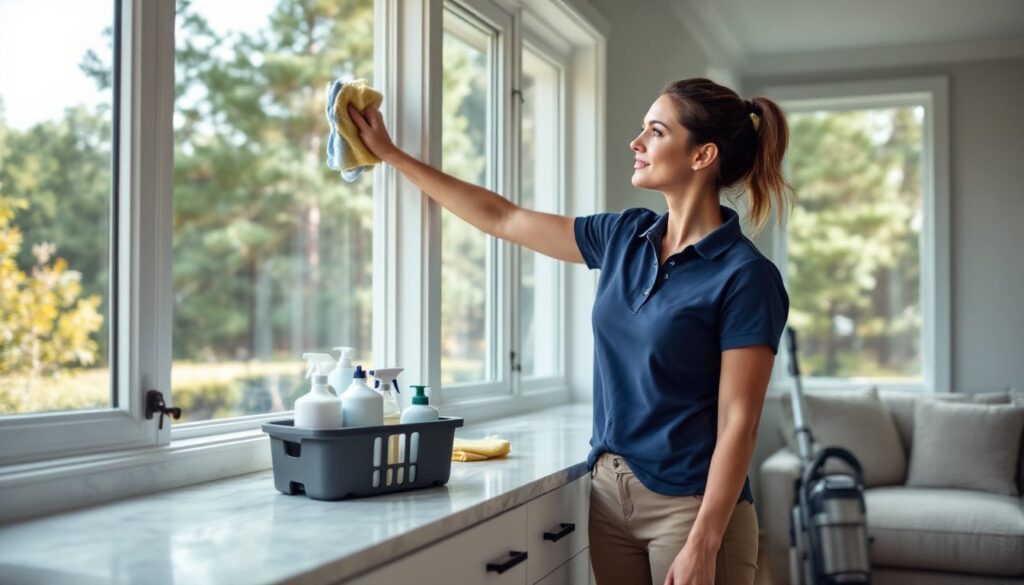

Maintaining a clean home in The Woodlands isn’t quite the same as it is in drier parts of Texas. Between the pine pollen that blankets everything in spring, the humidity that invites mildew into every corner, and the red clay that tracks in on boots year-round, homes here face distinct challenges. This guide walks through the materials, methods, and seasonal strategies that actually work in this climate, no fluff, just practical approaches homeowners can use whether they’re tackling the job themselves or deciding when to call in reinforcements.
Table of Contents
ToggleKey Takeaways
- House cleaning in The Woodlands requires climate-specific strategies to address pine pollen, high humidity, mold, and red clay—challenges that standard cleaning methods don’t solve.
- Essential supplies for Woodlands homes include EPA-registered fungicides, HEPA-filter vacuums, microfiber cloths, pH-neutral hardwood cleaners, and TSP for decks, rather than generic all-in-one products.
- Seasonal maintenance—monthly filter changes in spring, AC drain line cleaning in summer, gutter cleaning twice in fall, and interior deep cleaning in winter—prevents structural damage and mold growth.
- Professional cleaning services are worth the investment for mold exceeding 10 square feet, post-construction cleanup, and steam cleaning in humid climates, where DIY rental equipment risks over-wetting.
- Daily micro-tasks like squeegeeing shower doors, strategic supply placement, and preventive measures like grout sealing reduce cleaning time and prevent costly moisture-related problems in Woodlands homes.
Why The Woodlands Homes Require Special Cleaning Considerations
The Woodlands sits in a humid subtropical zone with annual rainfall topping 50 inches. That moisture creates specific problems most desert-state cleaning guides won’t address.
Pine pollen arrives in thick yellow-green waves each March and April, coating vehicles, decks, and working its way through window screens. Standard dusting methods just smear it around. You’ll need damp microfiber cloths and HEPA-filter vacuums to capture it effectively.
Humidity levels hover around 75% year-round, creating ideal conditions for mold and mildew on grout, caulk, window frames, and inside cabinets. Homes built before 2000 often lack adequate vapor barriers, making crawl spaces and attics prime breeding grounds. Regular inspections of these areas prevent small issues from becoming structural problems.
Red clay soil dominates the area. Unlike sand, it contains iron oxides that stain grout, carpet, and hardwood permanently if not addressed quickly. Doormats help, but they’re not enough, you need a cleaning protocol at entry points.
Oak and pine tree coverage means constant leaf litter, sap drips on decks and patios, and tannin staining on siding. Power washing once or twice yearly is standard maintenance here, not optional.
Homeowners should also account for the region’s new construction materials. Many Woodlands homes built in the last decade use engineered hardwood, luxury vinyl plank (LVP), and quartz countertops, all of which require different cleaning agents than older solid wood or granite installations. Using the wrong products voids warranties.
Essential Cleaning Supplies Every Woodlands Homeowner Needs
Skip the all-in-one miracle cleaners. Here’s what actually handles The Woodlands’ specific challenges:
For humidity-related issues:
- Concrobium Mold Control or similar EPA-registered fungicide for grout, tile, and non-porous surfaces
- Dehumidifier rated for your square footage (a 50-pint model covers roughly 3,000 sq ft)
- White vinegar (5% acidity) for light mildew on glass and fixtures, cheap and effective
For flooring:
- pH-neutral hardwood cleaner (Bona is a common choice: it won’t strip polyurethane finishes)
- Microfiber dust mop with washable pads, disposable sheets don’t capture clay particles effectively
- Wet-dry shop vac for garage and outdoor areas where clay accumulates
For surfaces and air quality:
- HEPA vacuum with sealed system (look for True HEPA certification, not “HEPA-type”)
- Microfiber cloths in three colors: one for kitchens, one for bathrooms, one for general dusting (prevents cross-contamination)
- TSP (trisodium phosphate) for decks and siding, cuts through tannin stains and sap residue before power washing
For high-traffic areas:
- Enzyme-based cleaner for organic stains (pet accidents, food spills)
- Stiff-bristle brush for grout (an old toothbrush works, but a grout brush with a long handle saves your knees)
Avoid ammonia-based cleaners on natural stone and steer clear of oil soaps on engineered hardwood, they leave residue that attracts more dirt. Read product labels and match them to your actual flooring and counter materials.
Room-by-Room Deep Cleaning Strategies for Woodlands Houses
Deep cleaning isn’t about doing everything at once. It’s about hitting the problem areas specific to each room on a rotating schedule.
Living areas and bedrooms:
- Start at the ceiling. Dust crown molding, ceiling fans, and light fixtures with a microfiber extension duster.
- Wipe down baseboards with a damp cloth, they collect clay dust even in upstairs rooms thanks to HVAC circulation.
- Vacuum upholstery using the brush attachment. Pine pollen embeds in fabric and becomes airborne when you sit down.
- Clean windows inside and out. Humidity leaves mineral deposits on glass that regular cleaners won’t touch: use a 1:1 vinegar-water solution.
- For mattresses that need refreshing, methods like airing and spot cleaning help eliminate dust mites that thrive in humid climates.
Hardwood and LVP floors:
Sweep or dust mop daily in entryways. Weekly, use a damp (not wet) mop with pH-neutral cleaner. Excess water warps engineered wood and seeps into LVP seams.
Tackling Kitchen and Bathroom Challenges
These rooms take the brunt of humidity damage.
Kitchens:
- Degrease range hoods and backsplash tile monthly. Cooking oil combines with humidity to create a sticky film that traps dust.
- Pull out appliances and vacuum coils on refrigerators. Dust buildup reduces efficiency and creates fire risk.
- Check under the sink for mold around pipes. Slow leaks are common in homes with high water pressure (typical in newer Woodlands subdivisions).
- Clean garbage disposal with ice cubes and citrus peels, then run cold water for 30 seconds. Humid air accelerates bacterial growth in disposals.
Bathrooms:
- Scrub grout with a baking soda paste and stiff brush every 4-6 weeks. If grout is already stained, a diluted bleach solution (1 part bleach to 10 parts water) works, but test in an inconspicuous spot first.
- Recaulk tubs and showers every 2-3 years. Caulk fails faster here than in dry climates. Cracked caulk = water intrusion = eventual mold in wall cavities.
- Run exhaust fans during showers and for 20 minutes after. If your fan is original to a pre-2010 build, it’s probably moving less than 50 CFM and needs replacement.
- Wipe down shower doors after each use. A squeegee takes 15 seconds and prevents hard water buildup that requires harsh chemicals later.
Seasonal Cleaning Tips for The Woodlands Climate
Each season brings different challenges. Time your deep cleaning to match.
Spring (March-May):
Pollen season. Change HVAC filters monthly instead of quarterly, standard 30-day filters clog fast. Wipe down window sills and door frames weekly. Hose off outdoor furniture and decks after the worst of the pollen drops (usually late April). This is also a good time to inspect attic vents for adequate airflow before summer humidity peaks.
Summer (June-August):
Mold and mildew season. Inspect caulk, grout, and weather stripping. Clean AC drain lines with a vinegar flush to prevent algae clogs (a common cause of overflow and water damage). Power wash siding and fences, tannins and mildew build up fast in heat and humidity. Trim back vegetation touching the house: it traps moisture against siding.
Fall (September-November):
Leaf management. Clean gutters twice during fall, oak leaves are heavy and clog downspouts, which leads to fascia rot. Check window and door seals before winter drafts start. This is the best time for indoor projects like organizing storage spaces, since you won’t be fighting heat or pollen.
Winter (December-February):
Interior focus. Deep clean carpets and upholstery while you can leave windows open for ventilation (rare in summer). Service your fireplace or wood stove if you have one. Inspect for pest entry points, rodents and insects seek warmth. Check crawl spaces and attics for condensation issues that worsen when heaters run.
DIY vs. Professional Cleaning Services: Making the Right Choice
Most routine cleaning is DIY-friendly. But some situations call for professionals.
When to DIY:
- Weekly maintenance cleaning (vacuuming, mopping, bathrooms)
- Seasonal tasks like gutter cleaning and deck washing (assuming you’re comfortable on a ladder and using a power washer)
- Spot treating mold on non-porous surfaces under 10 square feet
When to call a pro:
- Mold exceeding 10 sq ft, or any mold in HVAC systems or behind walls. This often indicates a moisture intrusion problem that needs diagnosis. Disturbing large mold colonies without containment spreads spores through the house.
- Post-construction cleaning. Drywall dust and sawdust contain silica, proper cleanup requires HEPA filtration and specific techniques.
- Exterior window cleaning on two-story homes. It’s a safety issue, and pros carry liability insurance.
- Move-in/move-out deep cleaning. Professional services in The Woodlands typically charge $0.10-$0.20 per square foot depending on home condition and services included. For a 2,500 sq ft home, expect $250-$500.
- Carpet and upholstery steam cleaning. Rental machines lack the suction power of truck-mounted units, leading to over-wetting and mold risk in humid climates.
Vetting professional cleaners:
Verify they’re insured and bonded. Ask if they bring their own supplies (most do) and whether those products are safe for your specific flooring and surfaces. Request references from other Woodlands clients, cleaning methods that work in dry climates don’t always translate here.
Many homeowners use a hybrid approach: weekly DIY maintenance with quarterly professional deep cleans focusing on problem areas like tile and grout.
Time-Saving Cleaning Hacks for Busy Woodlands Families
Efficiency beats perfection when you’re juggling work, kids, and home maintenance.
Daily micro-tasks (5 minutes each):
- Squeegee shower doors after morning showers
- Wipe kitchen counters and stovetop after dinner
- Run a microfiber dust mop through high-traffic areas
- Empty bathroom and kitchen trash daily (humidity accelerates odors)
Strategic supply placement:
Keep cleaning caddies in each bathroom and the kitchen. Carrying supplies around wastes time and makes quick touch-ups less likely to happen. Stock each caddy with microfiber cloths, all-purpose cleaner, and a scrub brush.
Automate what you can:
- Robot vacuums handle daily floor maintenance in open-plan spaces. They won’t replace deep vacuuming but reduce frequency needed.
- Programmable thermostats with humidity control reduce mold growth and improve air quality without manual adjustments.
- Automatic toilet bowl cleaners (drop-in tablets) extend time between scrubbing, though they’re not substitutes for regular cleaning.
Batch similar tasks:
Clean all mirrors and glass in one session with the same cloth and solution. Do all dusting top-to-bottom through the house before vacuuming. This reduces setup time and keeps you from backtracking.
Focus on high-impact areas:
A clean kitchen and bathrooms make the whole house feel cleaner, even if bedrooms aren’t perfect. Prioritize visible surfaces and frequently touched spots (door handles, light switches, faucet handles). For broader strategies on maintaining an organized home environment, many homeowners find value in systematic cleaning routines that break large tasks into manageable blocks.
Prevent problems instead of fixing them:
Place heavy-duty mats at every exterior door (inside and out). Use drawer organizers to prevent junk accumulation. Apply grout sealer after deep cleaning, it repels moisture and stains, cutting scrubbing time in half.
The Woodlands climate demands consistent maintenance rather than occasional deep dives. Fifteen minutes daily beats three hours every Saturday, and prevents the kind of buildup that requires professional intervention.