
A dirty exterior doesn’t just hurt curb appeal, it can shorten the lifespan of your siding, trim, and even your roof. Pressure cleaning (sometimes called power washing) removes years of grime, mildew, algae, and oxidation that conventional scrubbing can’t touch. Done right, it’s one of the most cost-effective maintenance tasks a homeowner can tackle. Done wrong, you’ll blast paint off clapboards, gouge wood siding, or drive water behind your sheathing. This guide walks through equipment choices, proven techniques, and the judgment calls that separate a clean house from a repair bill.
Table of Contents
ToggleKey Takeaways
- House pressure cleaning removes years of grime, mildew, and algae that damage siding and shorten exterior lifespan, preventing costly repairs when done properly.
- Electric pressure washers (1,300–2,000 PSI) work best for vinyl and composite siding, while gas models (3,000+ PSI) handle brick and concrete, with equipment costs ranging from $150–$700 depending on your home’s needs.
- Always start with lower pressure and wider nozzles on a test patch first, apply detergent with proper dwell time, and rinse from top to bottom at a 12–18 inch distance to avoid water damage and paint stripping.
- Pressure cleaning improves home resale value by 3–5%, exposes hidden maintenance issues early, and takes just 3–4 hours versus a weekend of hand-scrubbing on a typical ranch home.
- Hire a professional for stucco, historic wood, three-story homes, or pre-1978 properties with potential lead paint instead of attempting DIY to avoid costly damage and safety risks.
What Is House Pressure Cleaning and Why Does It Matter?
Pressure cleaning uses a motorized pump to force water through a narrow nozzle at 1,500 to 4,000 PSI (pounds per square inch), creating a high-velocity stream that strips organic growth, dirt, and oxidized paint from exterior surfaces. Unlike a garden hose that delivers 40–60 PSI, a pressure washer can remove embedded stains in seconds.
Most residential units run on electricity or gas and pull water from a standard hose bib. Electric models top out around 2,000 PSI and work well for vinyl siding, composite decking, and painted trim. Gas-powered washers reach 3,000+ PSI and handle brick, concrete, and heavily stained wood, but they’re louder, heavier, and require seasonal maintenance.
Regular pressure cleaning prevents rot and paint failure. Mildew and algae hold moisture against siding, accelerating decay in wood and composite materials. On painted surfaces, organic growth works under the paint film, causing peeling and blistering. Cleaning every 18–24 months interrupts that cycle and extends the intervals between repainting or re-staining.
Benefits of Pressure Cleaning Your Home’s Exterior
A clean exterior lifts resale value. Real estate agents report that homes with freshly cleaned siding and walkways photograph better and command higher offers, sometimes 3–5% more than comparable properties with grimy facades.
You’ll also catch maintenance issues early. Pressure cleaning exposes cracked caulk, loose trim boards, and damaged siding that was hidden under dirt. Spotting a split board in May gives you time to replace it before winter moisture turns it into a rot problem.
Health benefits matter, too. Black algae (Gloeocapsa magma) and green mold release spores that aggravate asthma and allergies. Removing them from siding, window frames, and eaves improves outdoor air quality around entries and HVAC intakes.
Finally, it’s faster and less labor-intensive than hand-scrubbing. A 2,000-square-foot ranch takes 3–4 hours with a pressure washer versus a full weekend with a brush and bucket. That time savings alone justifies the tool investment for most homeowners.
Choosing the Right Pressure Washer for Your Home
Match PSI and GPM (gallons per minute) to your siding type. Vinyl and aluminum siding clean well at 1,300–2,000 PSI with a 25-degree nozzle. Brick, stucco, and concrete need 2,500–3,000 PSI and a 15-degree tip. Wood siding and composite decking sit in between at 1,500–2,000 PSI, but you’ll want variable pressure control to avoid gouging softer boards.
Electric pressure washers ($150–$300) are quieter, start instantly, and require zero fuel mixing. They’re ideal if you’re cleaning vinyl siding, fencing, or a single-story home. Most plug into a standard 120V outlet and draw 12–15 amps, check your breaker capacity before buying.
Gas-powered models ($300–$700) deliver higher PSI and GPM, making them faster on large homes, driveways, and two-story structures. They need seasonal oil changes, carburetor maintenance, and ethanol-free fuel for storage. If you’ve got a half-acre property or plan to clean concrete regularly, the extra power pays off.
Don’t overlook nozzle selection. Most washers ship with color-coded tips: red (0°) is a pinpoint jet for concrete: yellow (15°) strips paint: green (25°) is the all-purpose workhorse for siding: white (40°) is gentle enough for windows and cars. A rotating turbo nozzle combines the cutting power of a 0° tip with a 15° spray pattern, ideal for oil-stained driveways but too aggressive for most siding.
Step-by-Step Guide to Pressure Cleaning Your House
1. Prep the area. Close all windows and tape plastic over electrical boxes, outlets, and light fixtures. Move planters, furniture, and grills at least 10 feet from the house. Wet down shrubs and groundcover, detergent can stress plants, and a pre-soak dilutes runoff.
2. Apply detergent (if needed). Switch to a low-pressure soap nozzle (often black or marked “soap”) and apply house-wash detergent from bottom to top in 4-foot sections. Let it dwell for 5–10 minutes but don’t let it dry on the siding. For mildew, look for products containing sodium hypochlorite or oxygen bleach: for grease and oxidation, alkaline degreasers work better.
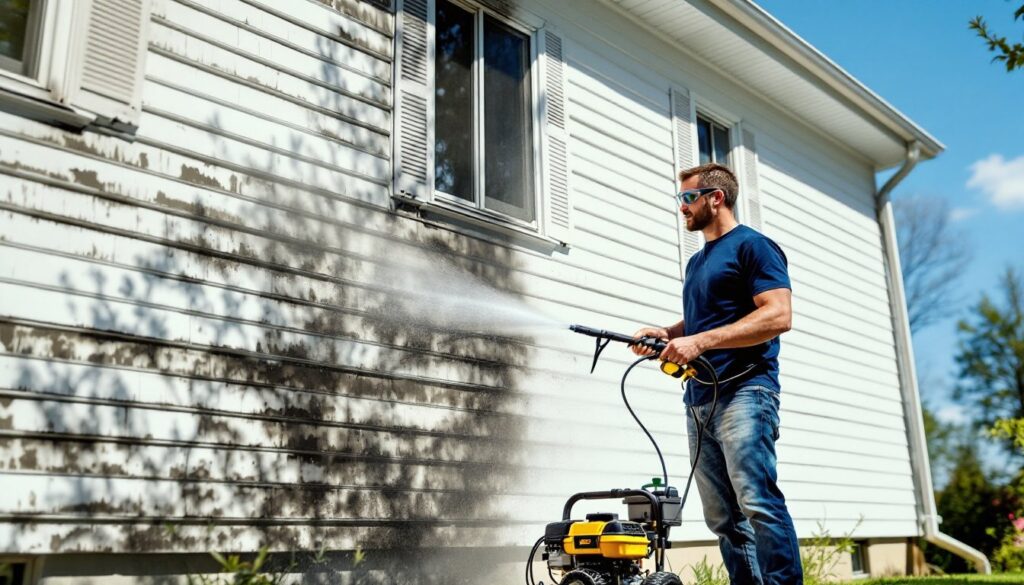
3. Rinse top to bottom. Swap in a 25-degree green nozzle and start at the roofline, working downward in overlapping horizontal passes. Hold the wand 12–18 inches from the siding and angle the spray slightly downward to avoid forcing water behind the cladding. On lap siding or clapboards, never aim upward into the seams.
4. Check your progress every few feet. If you’re not removing dirt, move the nozzle closer or switch to a 15-degree tip. If you’re stripping paint or leaving gouges, back off the pressure or increase distance.
5. Tackle trim and details last. Window frames, soffits, and corner boards need a gentler touch, use a 40-degree white nozzle and keep the wand at least 24 inches away. If you’ve got wood windows, avoid spraying directly into sash joints where water can penetrate the glazing.
Safety note: Wear safety goggles, closed-toe boots, and hearing protection (gas models hit 85+ dB). Never point the wand at people, pets, or glass, pressure washers can inject water under skin or shatter windows. If you’re working above ground level, use a stable ladder with standoff stabilizers, not a step stool.
Common Mistakes to Avoid When Pressure Cleaning
Using too much pressure is the #1 rookie error. A 3,000 PSI stream will strip paint, splinter wood, and crack mortar joints. When in doubt, start with a wider nozzle and lower pressure, then increase only if the surface doesn’t respond.
Spraying upward into siding seams drives water behind the weather barrier, soaking insulation and framing. On clapboard, shake, or lap siding, always angle the spray downward or straight-on.
Skipping surface testing costs homeowners every year. Before you clean the entire house, test a 2×2-foot patch in an inconspicuous spot (behind a downspout or on a side wall). Let it dry for 24 hours to check for damage, discoloration, or paint lifting.
Ignoring detergent dwell time means you’ll compensate with excessive pressure. Most house-cleaning products need 5–10 minutes to break down organic stains. Rinse too soon and you’ll re-clean the same spots.
Forgetting ladder safety on two-story homes. Pressure washers generate recoil force, if you’re not braced, the wand can throw you off balance. Use a standoff ladder stabilizer, keep both feet on the rungs, and never lean past the rail. For anything above 20 feet or near power lines, hire a pro with scaffolding.
DIY vs. Hiring a Professional Pressure Cleaning Service
DIY makes sense if you’ve got a single-story home, vinyl or composite siding, and a free weekend. A decent electric pressure washer runs $200–$300, detergent costs $15–$30, and you’ll spend 3–5 hours on a typical ranch. That’s roughly $0.12–$0.18 per square foot when you amortize equipment over multiple uses.
Professional services charge $0.35–$0.75 per square foot depending on siding type, home height, and regional labor rates. For a 2,000-square-foot two-story, expect estimates between $280 and $560. Pros bring commercial-grade equipment, liability insurance, and the experience to adjust pressure on the fly for mixed materials, brick foundations, vinyl siding, and painted wood trim on the same wall.
Hire a pro if you have:
• Stucco or EIFS (Exterior Insulation and Finish System), improper pressure punches holes in the acrylic finish.
• Historic wood siding or original paint, you need someone who can feather pressure to clean without damage.
• A three-story home or steep roofline, scaffolding and fall-protection gear aren’t DIY-friendly.
• Lead paint concerns, homes built before 1978 may require EPA Lead-Safe practices, which most homeowners aren’t certified to perform.
Check contractor credentials before hiring: ask for liability insurance, recent references, and photos of completed jobs on similar siding types. Avoid anyone who won’t provide a written estimate or who quotes over the phone without seeing the property.
Conclusion
Pressure cleaning your home’s exterior is straightforward maintenance that prevents costly repairs and extends the life of your siding, trim, and paint. Choose equipment that matches your siding material, take time for proper surface prep, and respect the power of high-pressure water. For single-story homes with forgiving materials like vinyl, it’s a manageable weekend DIY project. For multi-story homes, delicate surfaces, or anything involving ladders near power lines, a licensed professional is the safer, and often faster, choice.