
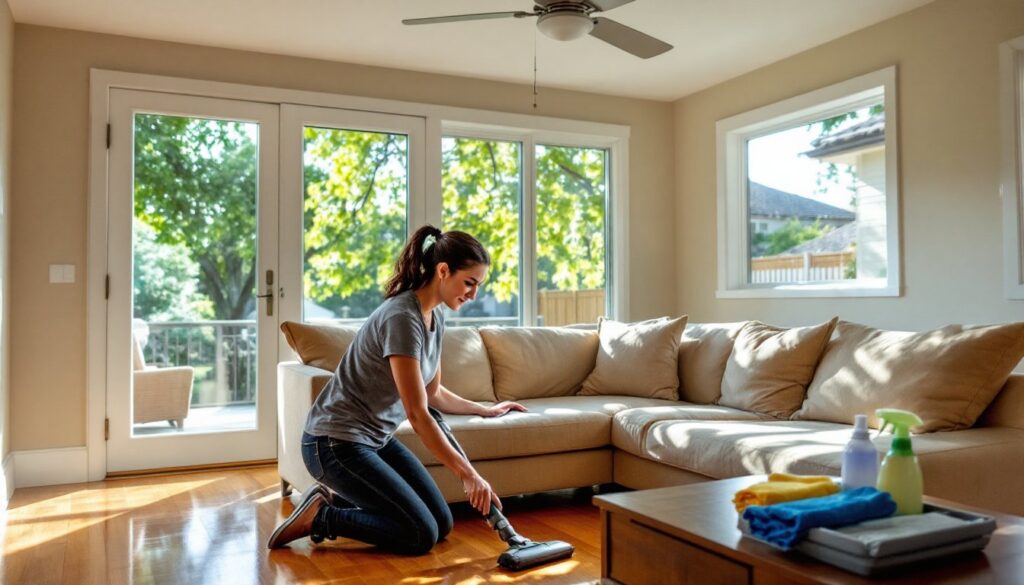

Lake Forest homes face unique cleaning challenges, from pollen that blankets everything in spring to the fine dust that sneaks in during dry summer months. Whether you’re maintaining a century-old craftsman or a newer build near the Arroyo, your cleaning strategy needs to match your home’s specific conditions. This guide walks you through the supplies, techniques, and timing that’ll keep your Lake Forest home consistently clean without burning hours every week. No fluff, just practical steps that work.
Table of Contents
ToggleKey Takeaways
- Lake Forest homes require a customized house cleaning strategy that accounts for seasonal pollen, mineral-heavy water, and moisture challenges unique to the area’s microclimate.
- Stock essential pH-neutral cleaners, microfiber cloths, a HEPA-filter vacuum, and vinegar—most household cleaning tasks require only three to four products.
- Deep clean kitchens monthly (range hood filters, refrigerator coils, dishwashers) and bathrooms quarterly (grout, showerheads, faucets) to combat Lake Forest’s hard water and humidity.
- Adjust your house cleaning frequency seasonally: change HVAC filters monthly during spring pollen season, vacuum twice weekly in summer, and inspect seals in fall before winter rains.
- Hire professional cleaning services for deep cleans twice yearly or for homes over 3,000 square feet, while maintaining weekly DIY maintenance to balance cost and results.
Why Lake Forest Homeowners Need a Tailored Cleaning Strategy
Lake Forest sits in a microclimate that throws curveballs at your cleaning routine. The area’s moderate humidity and proximity to wooded areas mean mold and mildew show up faster than in drier inland neighborhoods. Dust accumulation varies by season, spring brings oak and sycamore pollen, while late summer and fall deliver that infamous Southern California dust.
Older homes in the central neighborhoods often have original hardwood floors and plaster walls that require gentler products than modern synthetics. Many Lake Forest homes also feature large windows designed to capture natural light, which means streak-free glass cleaning becomes a visible priority.
If your home has a crawl space rather than a slab foundation, you’re dealing with different airflow patterns that can pull in more dust from below. Homes near the lake or parks face additional challenges from waterfowl droppings and organic debris. Standard cleaning schedules don’t account for these variables, your approach should.
Essential Cleaning Supplies Every Lake Forest Home Should Have
Stock these supplies before you start any serious cleaning:
Core cleaning agents:
- All-purpose cleaner (pH-neutral for mixed surfaces)
- White vinegar (cuts hard water deposits common in Lake Forest)
- Baking soda (mild abrasive for sinks and tubs)
- Microfiber cloths (at least a dozen, color-code them by room to avoid cross-contamination)
- Disinfectant (EPA-registered, effective against common household bacteria)
Specialty products:
- Wood floor cleaner (no oil-based products on polyurethane finishes)
- Glass cleaner with ammonia (works better in moderate humidity)
- Grout brush with stiff nylon bristles
- HEPA-filter vacuum (essential for pollen season)
- Extendable duster for high ceilings and crown molding
Safety gear:
- Nitrile gloves (latex breaks down faster with vinegar-based cleaners)
- Safety goggles when working with any aerosol cleaner
- N95 mask if you’re dealing with mold or heavy dust
Avoid overbuying specialized products. Most cleaning tasks in a home use three or four products maximum. The research on home organization tips consistently shows that reducing product clutter makes you more likely to actually clean regularly.
Room-by-Room Cleaning Guide for Lake Forest Homes
Kitchen and Bathroom Deep Cleaning
Kitchens and bathrooms share similar challenges: grease, moisture, and high-touch surfaces that harbor bacteria.
Kitchen focus areas:
- Degrease the range hood filter monthly. Remove it, soak in hot water with dish soap and baking soda for 15 minutes, scrub with a soft brush, rinse, and air-dry completely before reinstalling.
- Clean refrigerator coils every six months. Unplug the unit, locate coils (usually rear-mounted or beneath), and vacuum with a brush attachment. Dirty coils reduce efficiency by up to 25%.
- Sanitize countertops daily with disinfectant. Let it sit for the contact time listed on the label (usually 3-5 minutes) before wiping. Granite and marble require pH-neutral cleaners, acidic products etch the surface.
- Deep-clean the dishwasher monthly. Remove filter, hand-wash it, then run an empty cycle with a cup of white vinegar on the top rack.
Bathroom priorities:
- Attack grout with a paste of baking soda and water. Apply with a grout brush, let sit 10 minutes, scrub in circular motions, rinse thoroughly. For stubborn mildew, use a diluted bleach solution (1 part bleach to 10 parts water) with proper ventilation.
- Descale showerheads and faucets quarterly. Remove aerators, soak in vinegar for 30 minutes, scrub with an old toothbrush, reinstall. Lake Forest’s water is moderately hard, mineral buildup is inevitable.
- Clean toilet jets (the rim holes) with a wire hanger or Allen wrench. Deposits here reduce flush effectiveness and create staining.
- Wash shower curtains and liners monthly in the washing machine with detergent and a cup of vinegar. Hang immediately to prevent mildew.
Living Areas and Bedrooms
These spaces accumulate dust and allergens that affect air quality, especially during pollen season.
Living room steps:
- Vacuum upholstery weekly using the brush attachment. Go slowly, one pass doesn’t capture embedded dust. For homes with pets, use a rubber squeegee on fabric furniture to pull up hair before vacuuming.
- Dust ceiling fans before floor cleaning. Spray cleaner on a microfiber cloth (never directly on blades), wipe both sides, then vacuum or sweep the floor to catch fallen debris.
- Clean window tracks with a vacuum crevice tool, then scrub with an old toothbrush dipped in all-purpose cleaner. Dry with a cloth to prevent mildew.
- Rotate and flip cushions monthly to distribute wear and prevent dust mites from concentrating in one spot.
Bedroom maintenance:
- Wash bedding weekly in hot water (at least 130°F) to kill dust mites. Pillows should be washed quarterly: mattress covers every six months.
- Vacuum under the bed and inside closets monthly. Dust bunnies aren’t just cosmetic, they trap allergens and provide hiding spots for pests.
- Wipe down baseboards and trim with a damp microfiber cloth every two weeks. This is where dust settles first in bedrooms.
- Air out the room daily by opening windows for 10-15 minutes, weather permitting. This reduces humidity and refreshes indoor air.
Seasonal Cleaning Tips for Lake Forest’s Climate
Spring (March-May):
Pollen is your enemy. Change HVAC filters monthly instead of quarterly during peak season. Wipe down window sills and door frames weekly, pollen clings to these surfaces. Hose down exterior window screens to improve airflow and reduce indoor allergen transfer.
Summer (June-August):
Dust control becomes critical. The area’s dry winds carry fine particulate matter that infiltrates homes through even small gaps. Vacuum twice weekly during heat waves. Check weather stripping around doors and windows: replace if cracked or compressed. Clean or replace HVAC filters every 30-45 days.
Fall (September-November):
Prepare for rain. Clean gutters and downspouts to prevent overflow that can seep into crawl spaces. Inspect window and door seals for gaps that allow moisture intrusion. Test sump pumps if you have one. Many proven cleaning tips emphasize fall as the time to deep-clean carpets before holiday guests arrive.
Winter (December-February):
Address indoor humidity. Lake Forest winters are mild but wetter. Run bathroom exhaust fans during and 20 minutes after showers. Wipe down windows if condensation forms, it’s a mold precursor. Check under sinks for leaks that worsen in rainy weather. Clean fireplace ashes weekly if you’re using it regularly: buildup reduces draft efficiency and creates dust.
DIY vs. Professional Cleaning Services: What’s Right for You?
Go DIY when:
- You’re maintaining regular weekly cleaning and just need systems to stay consistent
- Your home is under 2,000 square feet with standard finishes
- You have time to dedicate 2-3 hours weekly to cleaning tasks
- You’re comfortable using a ladder for ceiling fans, light fixtures, and high windows
Hire professionals for:
- Deep cleans twice yearly. Pros have commercial-grade equipment (truck-mounted carpet extractors, rotary floor machines) that deliver results you can’t match with consumer tools.
- Post-renovation cleaning. Drywall dust infiltrates HVAC systems and requires HEPA vacuums and specialized filters.
- Move-in/move-out situations. Most leases and sale contracts require professional-level cleaning. DIY rarely meets those standards.
- Homes over 3,000 square feet. The time investment for thorough cleaning becomes unsustainable for most homeowners.
- Specialty surfaces. If you have marble, travertine, or hardwood floors that need professional-grade refinishing or sealing.
Cost reality check: Professional cleaning in Lake Forest typically runs $120-$200 for a standard 2,000-square-foot home (basic clean), and $250-$400 for deep cleaning. Prices vary based on home condition and service scope. Many detailed decluttering guides note that hiring help for quarterly deep cleans while handling weekly maintenance yourself offers the best balance of cost and results.
What to expect from pros: They should bring their own supplies, provide liability insurance, and give time estimates upfront. Ask whether they’re bonded (protects you if items are damaged or stolen). Check reviews specifically mentioning Lake Forest or nearby areas, local experience matters for understanding regional home types and common issues.
If you’re considering professional help, get quotes from three services. Ask what’s included in their standard package versus add-ons (interior windows, inside ovens, and baseboards are often extras). A reputable service will walk through your home before quoting.