
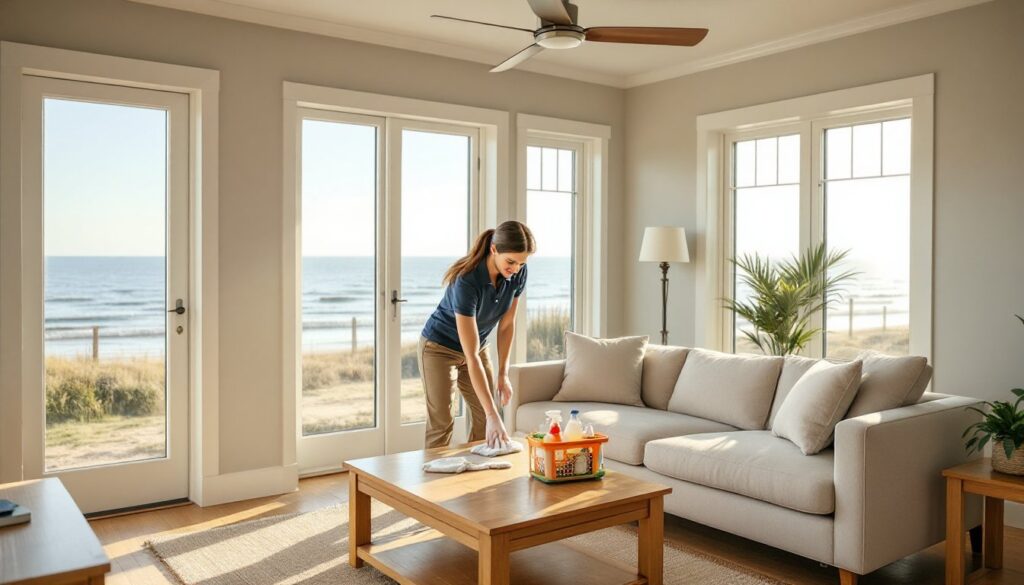

Long Island homes face a unique set of cleaning challenges that mainland properties don’t encounter as often. Salt air from the Atlantic corrodes fixtures faster. Sandy soil tracked in from beaches grinds into grout and hardwood. Humid summers breed mildew in coastal bathrooms, while harsh winters dump road salt and slush through mudrooms. If homeowners treat Long Island cleaning like a generic checklist, they’ll spend twice the effort for half the result. This guide breaks down room-by-room strategies, climate-specific DIY solutions, and when it makes sense to bring in pros, all tailored to the realities of Nassau and Suffolk County living.
Table of Contents
ToggleKey Takeaways
- Long Island homes require specialized cleaning strategies due to salt air corrosion, sandy soil infiltration, humidity fluctuations, and seasonal road salt exposure that generic cleaning routines can’t adequately address.
- Use targeted DIY solutions like distilled white vinegar for salt deposits, baking soda with hydrogen peroxide for grout, and tea tree oil sprays for mildew prevention tailored to Long Island’s coastal climate.
- Implement room-by-room weekly and monthly cleaning schedules including weekly mopping of tile entryways with pH-neutral cleaners during winter and monthly descaling of fixtures in hard-water areas common to Nassau County.
- Hire professional house cleaning services for move-in/move-out deep cleans ($300–$600), post-construction cleanup, recurring biweekly maintenance, and specialized tasks like exterior window cleaning to address salt-air damage.
- Adjust seasonal priorities: power-wash siding in spring, manage basement dehumidifiers in summer, clear gutters in fall, and mop salt-laden entryways weekly throughout winter to protect your Long Island home’s structural integrity.
Why Long Island Homes Need a Unique Cleaning Approach
Salt air exposure is the first culprit. Homes within five miles of the coast deal with accelerated corrosion on metal fixtures, doorknobs, and window tracks. That white crusty buildup isn’t just dust, it’s salt residue. Standard all-purpose cleaners won’t cut it: acidic solutions like distilled white vinegar (5% acidity) neutralize salt deposits without pitting metal.
Sandy soil is the second challenge. Long Island sits on glacial outwash plains, which means fine silica particles infiltrate every threshold. Unlike clay-based dirt that clumps, sand acts like sandpaper on wood floors and tile grout. High-traffic entryways need walk-off mats rated for exterior use (rubber-backed coir or polypropylene) that trap particles before they spread.
Humidity swings complicate mold prevention. Coastal zones hit 70-80% relative humidity in summer, while forced-air heating in winter drops it below 30%. Bathrooms without exhaust fans (common in pre-1980 construction) turn into mildew nurseries. Seasonal HVAC maintenance and dehumidifiers rated for 50-pint capacity in basements aren’t optional, they’re structural protection.
Finally, road salt and winter grime track through from November to March. Calcium chloride and sodium chloride corrode tile grout and leave white streaks on hardwood. Entryway tile should be mopped weekly with a pH-neutral cleaner during winter months, and area rugs near doors need biweekly vacuuming with a beater bar to lift embedded crystals.
Room-by-Room House Cleaning Checklist for Long Island Homeowners
A functional checklist adapts to square footage, occupancy, and proximity to the coast. These intervals assume a 1,500–2,500 sq. ft. single-family home with 2–4 occupants.
Kitchen and Bathroom Deep Cleaning Essentials
Kitchens accumulate grease, food particles, and humidity. Coastal homes also deal with salt-laden air that makes stainless steel appliances streak faster.
Weekly tasks:
- Degrease range hood filters with dish soap and hot water (or run through the dishwasher if metal mesh).
- Wipe down cabinet fronts near the stove with a microfiber cloth and diluted dish soap.
- Mop tile or vinyl floors with a pH-neutral cleaner. Avoid vinegar on natural stone, it etches marble and travertine.
- Clean sink drains with baking soda and boiling water to prevent biofilm buildup.
Monthly tasks:
- Pull out the refrigerator and vacuum condenser coils (dirty coils reduce efficiency by 25%).
- Descale faucet aerators and showerheads with vinegar-soaked rags (essential in hard-water areas like parts of Nassau County).
- Scrub grout lines with a stiff brush and oxygen bleach solution (sodium percarbonate). Chlorine bleach discolors colored grout.
Bathrooms battle mildew, soap scum, and mineral deposits. Exhaust fans should run during showers and for 20 minutes afterward.
Weekly tasks:
- Spray tile and glass shower walls with a 1:1 white vinegar and water solution after the last shower of the day. Squeegee dry.
- Scrub toilets with a pumice stone for hard-water rings (safe for porcelain, not for colored or plastic seats).
- Wash bath mats and shower curtains in hot water with a half-cup of baking soda.
Monthly tasks:
- Remove and soak showerheads in vinegar overnight to dissolve calcium buildup.
- Re-caulk tub and shower seams if existing caulk shows black mildew (it’s embedded, not surface-level). Use mildew-resistant silicone caulk rated for wet environments.
- Clean exhaust fan covers and vacuum the fan blades (most pop off with a squeeze or twist).
Living Spaces and Bedrooms: Weekly Maintenance Tips
Living rooms and bedrooms collect dust, pet dander, and outdoor allergens. Long Island’s proximity to ragweed zones means August through October requires extra diligence.
Weekly tasks:
- Vacuum carpets and area rugs with a HEPA-filter vacuum. Empty the canister or bag when it’s two-thirds full for maximum suction.
- Dust ceiling fans, baseboards, and window sills with a microfiber cloth (not a feather duster, which just redistributes particles).
- Wash bedding in hot water (130°F minimum) to kill dust mites. Cold-water detergents don’t sanitize.
Seasonal tasks:
- Flip or rotate mattresses every three months to prevent sagging.
- Vacuum upholstery and under couch cushions. Use the crevice tool for crumbs and pet hair.
- Wipe down window tracks with a damp cloth and vacuum out debris. Salt air accelerates grime buildup in aluminum tracks.
For detailed guidance on timing and frequency, many homeowners follow research-backed cleaning schedules that break tasks into daily, weekly, and seasonal categories.
DIY Cleaning Solutions That Work for Long Island’s Climate
Store-bought cleaners work fine, but Long Island’s salt air, hard water, and humidity call for targeted homemade solutions that cost pennies per gallon.
All-purpose salt and mineral remover:
- 1 cup distilled white vinegar
- 1 cup water
- 10 drops lemon essential oil (optional, for scent)
Mix in a spray bottle. Use on metal fixtures, window frames, and tile. Let sit for five minutes, then wipe with a microfiber cloth. Avoid natural stone, hardwood, and cast iron.
Heavy-duty grout cleaner:
- 1/2 cup baking soda
- 1/4 cup hydrogen peroxide (3% solution)
- 1 teaspoon dish soap
Mix into a paste. Apply with a stiff nylon brush, scrub grout lines, and let sit for 10 minutes. Rinse with warm water. This lifts mildew stains without the fumes of chlorine bleach.
Wood floor polish for salt-tracked areas:
- 1/2 cup olive oil
- 1/4 cup distilled white vinegar
- 20 drops lemon or orange essential oil
Mix and apply sparingly with a mop or cloth. Buff with a clean towel. This works on sealed hardwood and engineered floors, not unfinished wood.
Mildew prevention spray:
- 1 cup water
- 1 tablespoon tea tree oil
Spray on shower walls, tile, and grout after cleaning. Tea tree oil is a natural fungicide. Reapply weekly in humid months.
Safety note: Always label homemade cleaners and store them out of reach of children and pets. Never mix vinegar with hydrogen peroxide directly, it creates peracetic acid, which irritates skin and lungs. Apply them sequentially if needed, with a rinse in between.
When to Hire Professional House Cleaning Services on Long Island
Some tasks belong in a pro’s hands. Here’s when to call in reinforcements.
Move-in/move-out deep cleans: Rental turnover or home sales require top-to-bottom scrubbing, including baseboards, inside cabinets, and appliance interiors. Pros have industrial steam cleaners and time you don’t. Expect to pay $300–$600 for a 2,000 sq. ft. home in Nassau or Suffolk County, depending on condition.
Post-construction cleaning: Drywall dust, paint splatters, and adhesive residue need specialized solvents and HEPA vacuums. DIY attempts often smear dust into carpets and upholstery. Budget $0.10–$0.20 per square foot for post-reno cleaning.
Recurring biweekly or monthly service: If both adults work full-time and square footage exceeds 2,500, outsourcing routine cleaning reclaims weekends. Long Island rates run $120–$250 per visit for standard homes, more for waterfront properties with salt-air damage. Verify that crews are bonded and insured, liability matters if a cleaner damages a fixture or gets injured.
Specialized tasks:
- Carpet steam cleaning: DIY rental machines lack the suction power of truck-mounted units. Pros extract more moisture, preventing mold in humid climates. Schedule annually or after pet accidents.
- Window cleaning (exterior): Two-story homes with vinyl or aluminum-clad windows benefit from professional squeegee work and frame detailing. Salt spray leaves residue that DIY wipes can’t fully remove.
- Hoarding or estate cleanout: This isn’t routine cleaning, it’s specialized remediation that may involve biohazard disposal. Licensed services handle it safely and discreetly.
When vetting services, ask if they carry general liability insurance and workers’ compensation. Request references and check reviews on local platforms. Avoid unlicensed solo operators who can’t provide proof of insurance, if they’re injured on your property, homeowner’s insurance may not cover it.
Seasonal House Cleaning Strategies for Long Island Residents
Long Island’s four-season climate demands different priorities each quarter.
Spring (March–May):
- Power-wash exterior siding, decks, and walkways to remove winter salt and mildew. Use a 15-degree nozzle tip for concrete, 40-degree for vinyl siding. Keep the wand moving to avoid etching.
- Clean or replace HVAC filters before turning on air conditioning. Dirty filters reduce efficiency and circulate allergens.
- Wash windows inside and out. Use a squeegee and a solution of water with a few drops of dish soap, it’s cheaper and streak-free compared to commercial sprays.
- Inspect and clean gutters. Spring pollen and oak tassels clog downspouts, leading to foundation issues.
Summer (June–August):
- Run dehumidifiers in basements to keep humidity below 50%. Empty reservoirs daily or connect a drain hose.
- Deep-clean outdoor furniture and grills before entertaining season. Use a wire brush on grill grates and check propane connections for leaks (soapy water test).
- Pressure-wash pool decks and patios monthly if near the coast. Salt buildup accelerates concrete spalling.
Fall (September–November):
- Clear leaves from gutters and roof valleys. Clogged gutters cause ice dams in winter, which lead to interior water damage.
- Seal hardwood floors if traffic patterns show wear. Use a water-based polyurethane for low VOCs and faster dry time.
- Inspect weatherstripping on doors and windows. Replace any cracked or compressed foam to prevent drafts.
- Deep-clean the furnace area before heating season. Vacuum around the unit and change filters.
Winter (December–February):
- Mop tile entryways weekly with a pH-neutral cleaner to remove road salt. Acidic cleaners can etch ceramic glaze over time.
- Wipe down baseboards and door frames with a damp cloth, forced-air heat kicks up dust.
- Vacuum refrigerator coils in late January (basements often accumulate lint and pet hair during closed-window months).
- Check attic insulation for moisture or mold. Poor ventilation traps humid air, especially after snowmelt.
For tailored advice on organizing and simplifying seasonal tasks, homeowners often reference home organization strategies and comprehensive cleaning guides that break down projects by room and season.
Conclusion:
Long Island homes demand more than generic cleaning routines. Salt air, sandy soil, and humidity swings require targeted products, consistent schedules, and honest assessments about when to hire help. Stick to the room-by-room intervals, use DIY solutions built for coastal conditions, and adjust seasonal tasks to match your home’s exposure. The result isn’t just a cleaner house, it’s a protected investment that weathers Long Island’s elements year after year.